
TNVR (Trap-Neuter-Vaccinate-Return)
Stopping the Cycle
I didn’t know what ear-tipping was the first time I saw it. I found out the old-fashioned way (since “AI” wasn’t publicly available yet)…I Googled it. Turns out it meant somebody had already done the hard part. They trapped my new friend, gotten it fixed, & brought it back home. That’s the whole idea behind TNVR (Trap-Neuter-Vaccinate-Return): you’re not trying to make the cats disappear. You’re just trying to stop new ones from showing up.
When enough cats in a colony are sterilized & newcomers are quickly identified & treated, the population can stabilize & gradually decline as cats live out their natural lives. At the same time, vaccination & ongoing colony care can improve the health & quality of life of the cats already there.
The existing cats continue living in familiar surroundings in all the places they’ve known as home. Many times there are caregivers who provide food, fresh water, shelter & help keep an eye on their health. But as more & more members of the colony are sterilized, fewer kittens are born.
For anyone who has cared for a colony of community cats, the importance of consistent neutering & spaying is difficult to overstate. It matters more than people realize, because cats grow up fast. A female can get pregnant at five or six months old, sometimes younger, & pregnancy only takes about two months. So kittens born in spring can be having their own kittens by fall. One unspayed female, a few litters a year, & pretty soon what started as two or three cats behind the shed in your backyard turns into fifteen or twenty. Anyone who’s fed a colony for more than a summer has watched this happen. It sneaks up on you.
Kittens begin having kittens of their own. What began as two or three cats passing through your backyard can soon become ten, twenty or more. Us people who care about them suddenly find ourselves trying to provide food & shelter for an ever-growing number of animals.
In places where it is warm year-round, breeding seasons may be longer & can be especially difficult to interrupt.
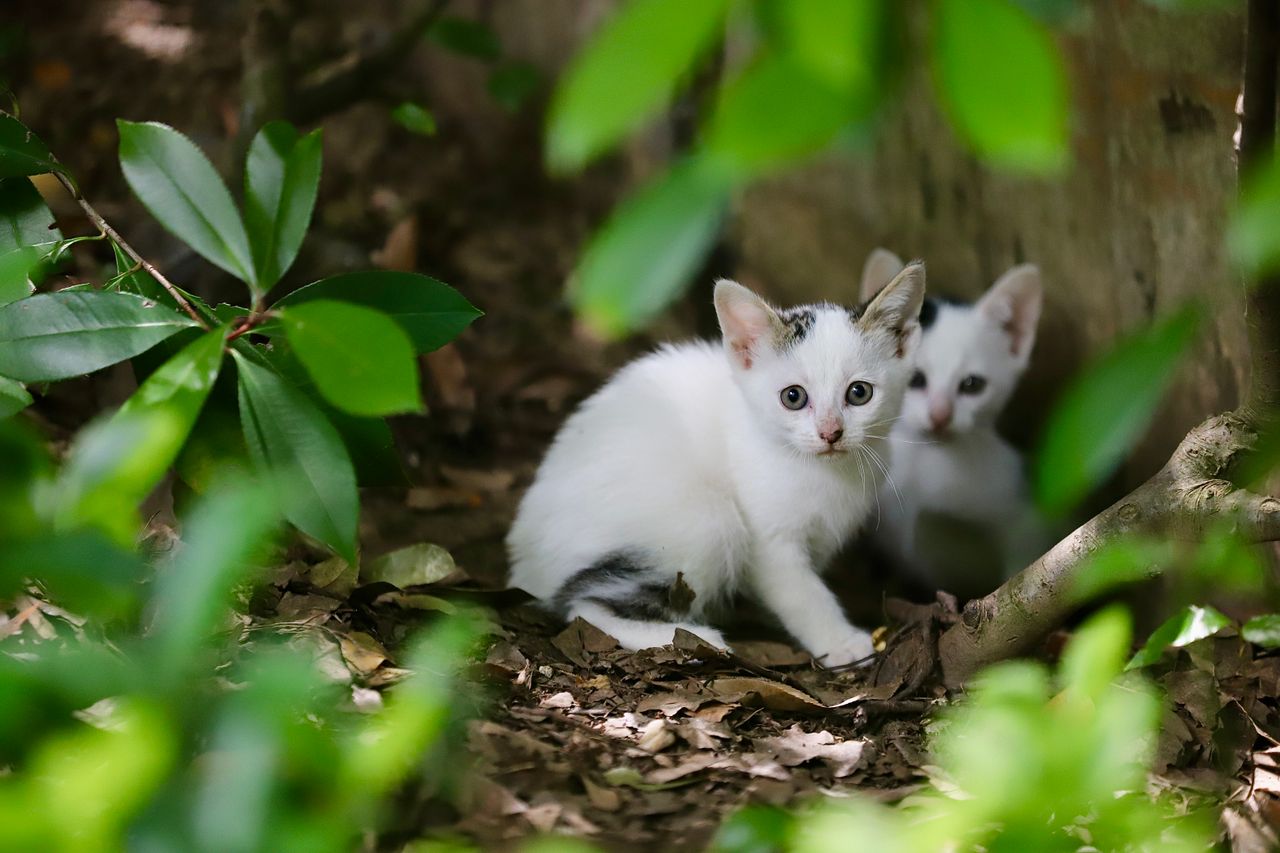
TNVR programs are designed to help interrupt that cycle. Cats are humanely trapped, taken to a vet or clinic, spayed or neutered, and oftentimes vaccinated. While they’re under, a vet clips the tip of one ear, that’s the “ear-tip” I mentioned, so anyone who sees the cat later knows by looking at them that they are fixed & there is no need to trap them again. Once they’ve recovered, kittens can enter into adoption programs & the more feral cats that are suited to outdoor life are returned to the territory they know as home.
No new litters. That’s the whole point.
What Happens to the Colony?
Nobody expects the cats to vanish overnight, & they don’t. What changes is the math. There was a study of a citizen-run TNR program across 20 Chicago colonies. Their populations dropped an average of 54% from when they entered the program, & 82% from their peak. Some of that was sterilization doing its job. Some was cats getting adopted out, especially friendly ones & kittens young enough to be socialized, while the more feral adults stayed put in familiar territory.

There’s evidence it helps beyond just one backyard, too. A larger study looking at TNR efforts across 72,970 cats in six U.S. communities found shelter intake dropped by a median of 32%, & euthanasia dropped by a median of 83%, during the study window. In no way does this mean that every TNVR program is going to achieve the same results, but it’s a pretty strong sign that when a community commits to this, shelters can benefit from it.
In no way does this mean that every TNVR program is going to achieve the same results. TNVR works best by sterilizing a substantial number of cats in an area – & then continuing the work.
None of this works halfway, though. If you fix a handful of cats & the rest keep breeding, the numbers can keep climbing regardless. & new cats show up anyway sometimes: someone moves & leaves a cat behind, or a stray wanders in from somewhere else, so it’s not a one-&-done project. It’s more like working in your garden. It becomes a labor of love. And getting to know your furry backyard friends over the years is one of the more rewarding perks.
A Better Life for the Cats Already Here
Population control is only part of the story.
Fixing cats changes their day-to-day lives, too, not just the population count. Females stop going through the wear & tear of repeat pregnancies & nursing. Males start chilling out & stop fighting as often, since their hormones aren’t driving them to compete for mates. Anyone who’s heard two toms yowling at 3 AM knows exactly how much quieter a neighborhood gets. Vaccines, usually rabies at minimum, add another layer of protection most street cats would otherwise go without.
Vaccination adds another layer of protection. TNVR programs commonly include rabies vaccination, & some programs provide additional core vaccines depending on their protocols & available resources.
Just as important is what happens afterward. A managed colony has people paying attention. & for a cat living outdoors, simply having someone watching can make a tremendous difference. They can identify newcomers who still need to be sterilized &, when resources allow, seek help for cats that become sick or injured.
It Takes a Community
None of this happens without people. Someone has to set the trap the night before & check it at dawn. Someone has to drive a terrified cat to a clinic where they’ve never been touched by a human before. Vets & techs have to be willing to work with animals who are frightened out of their minds. A neighbor puts out a bowl of clean water without being asked. A local rescue finds homes for the friendly ones & the kittens young enough to adjust.
If you’ve got cats hanging around your neighborhood & want to help, the easiest place to start is with a local animal welfare group, humane society, or municipal animal services. They usually know which vets offer reduced-cost spay/neuter for community cats, & some will even loan you traps or help with transport. You can also just call a vet clinic directly & ask if they do TNVR, or know who does. Even if they don’t personally assist, they can usually point you somewhere.
The important thing is to ask before trapping. Community-cat programs often have specific appointment procedures, trapping schedules & requirements. Having a plan in place first makes the experience safer & less stressful for both the cat & the person trying to help.
One Cat at a Time
TNVR isn’t dramatic. Its successes are quiet. But there’s a female cat somewhere who’ll never have to nurse a litter she can’t feed. A tomcat who used to come home scratched up every now & then mostly just naps in the sun now. Kittens who never had to be born behind a dumpster, because their mother was already spayed months before she would’ve gone into heat.
It’s a colony that once had twenty cats &, years later, has ten. One day, only 3 remain. They are older now. Those familiar faces that still show up at feeding time. Survivors, still living in the same place they’ve always known.
And sometimes success isn’t measured by how many cats you do see remaining. It’s how many new ones you don’t.
